
I watched three films over the past several weeks that have stuck with me as I work on my own projects. Each one gave me a master class in screenwriting. Here’s the gist, with no spoilers:
NOBODY (2021)
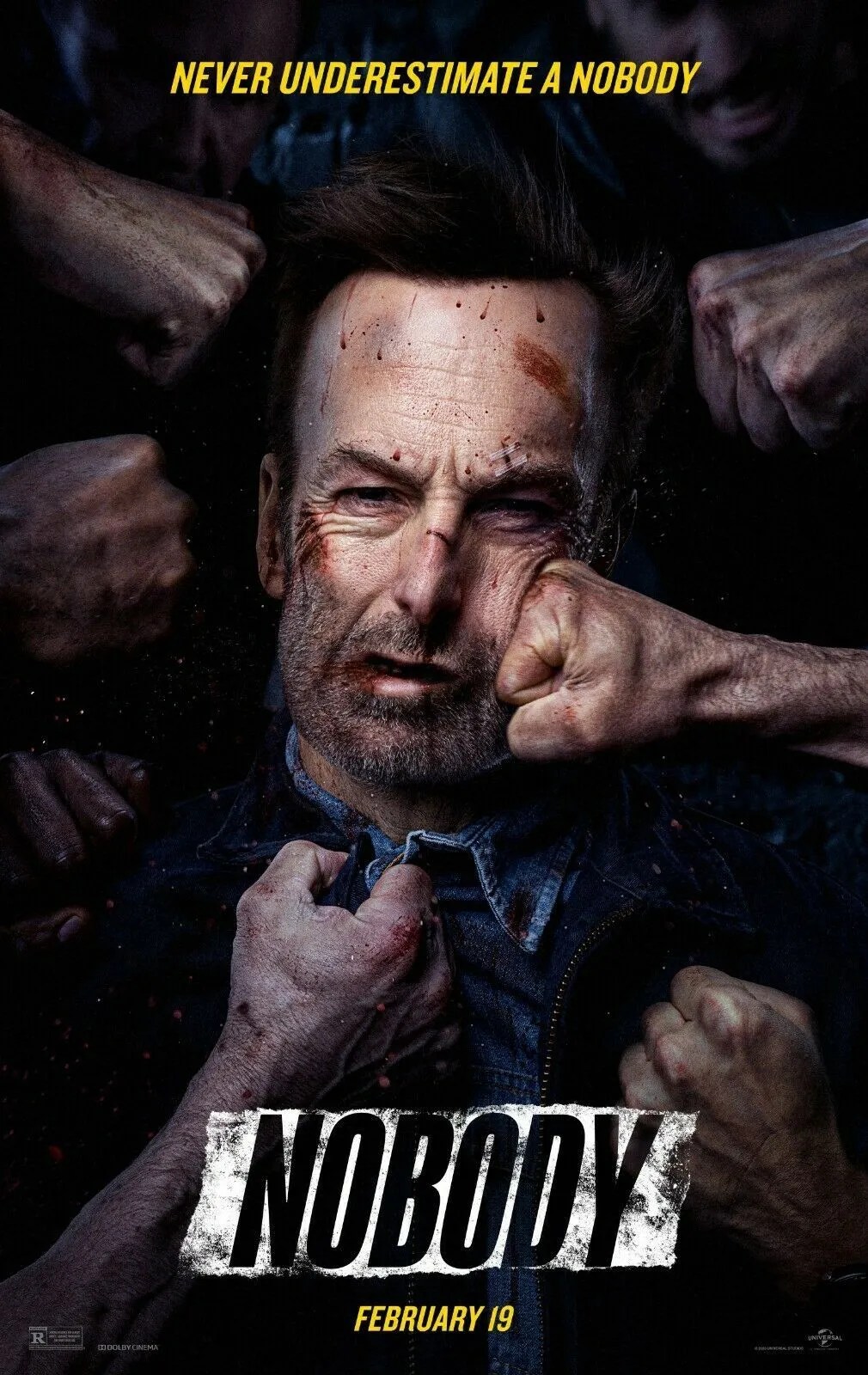
Written by Derek Kolstad, who also wrote JOHN WICK, this movie dished up one reveal after another once act 1 had lulled us all into a false sense of who’s who. In fact, those reveals had me watch the film three times over the weekend to see if I could catch them all.
Act 1 establishes the protagonist, Hutch Mansell (played by the amazing Bob Odenkirk), as the most beige husband and dad on the planet. Then acts 2, 3, and 4 rip our preconceived notions apart — just like they do for Hutch’s sullen teen.
Unlike in JOHN WICK, Kolstad lets the cute pet live. (I never saw JOHN WICK due to the dead dog. And I will never, ever watch THE GODFATHER because of the horse.)
Another interesting lesson from this script was its upside-down protag arc. By the time Hutch has made his way through untold rounds of ammunition, he’s basically reopened his backstory persona.
Whether interested in watching the film as a masterclass on reveals or you just want a Saturday night popcorn flick, NOBODY has you covered.
COLLATERAL (2004)
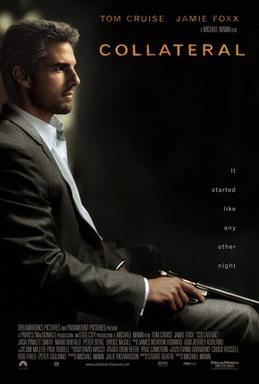
I lost some of my fan luster for Tom Cruise when the first MISSION IMPOSSIBLE (1996) made Jim Phelps a bad guy. Almost as bad as a dead horse in bed.
Hence, I’d missed COLLATERAL in the theatres. But a passing comment from a screenwriting guru had me curious. This movie, he said, was a great example of escalating peril for the protagonist, Max, played by Jamie Foxx. I asked Alexa to pull up the movie.
Like NOBODY, this film has some terrific reveals (and a cameo with Jason Stratham that threw me). But the protagonist’s arc, indeed, promises escalating doom for Max.
Written by Stuart Beattie, who also penned the 2003 PIRATES OF THE CARIBBEAN: THE CURSE OF THE BLACK PEARL, COLLATERAL’s act 1 establishes Max as a hardworking taxi driver with modest dreams of owning a chauffeuring company. During the following acts — beginning when the first target of hitman Vincent (Cruise) takes a header out a window to land on Max’s taxi — poor Max is forced try different means to survive: from waving over passersby to impersonating Vincent to overpowering a cop, and more. Definitely a solid example of ever-rising stakes and good reminder for me as I work on my current concept and outline.
THELMA (2024)
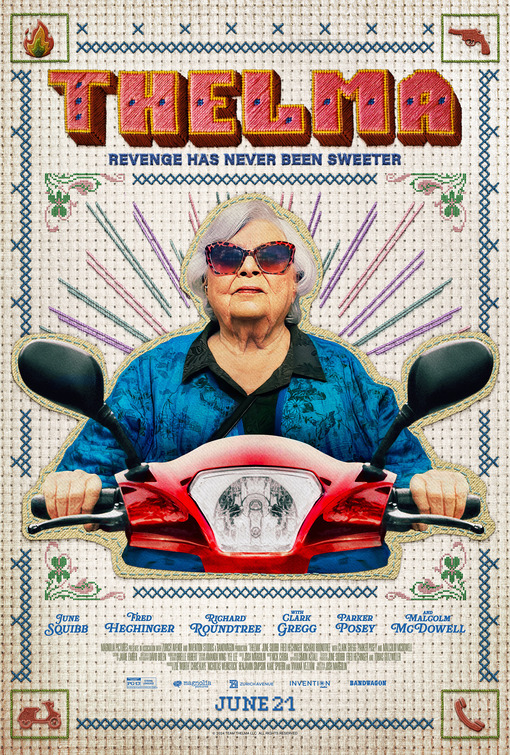
THELMA has been my favorite adventure flick of the year. There I said it.
The suspense of watching nonagenarian June Squibb scale an old staircase or traverse a cluttered lamp store holds its own against CGI-bloated superhero flicks — as does Richard Rountree‘s amazing titanium hip action.
Here again we witness ever-rising stakes, but now in writer/director Josh Margolin‘s multi-award winning tale of a grandmother duped out of $10,000 by scammers.
As I watched, I thought about pacing, the smart use of lighting and music to create suspense (even when it’s as background for someone rolling off a bed), and a budget well spent.
I also thought about determined creatives creating — and how our lives are speckled with bouts of comedy and drama and suspense. We just have to figure out how to fashion together 90 pages that don’t put viewers to sleep.
 PawPrints Productions