Category Archives: Uncategorized

Three movies of note

I watched three films over the past several weeks that have stuck with me as I work on my own projects. Each one gave me a master class in screenwriting. Here’s the gist, with no spoilers:

NOBODY (2021)
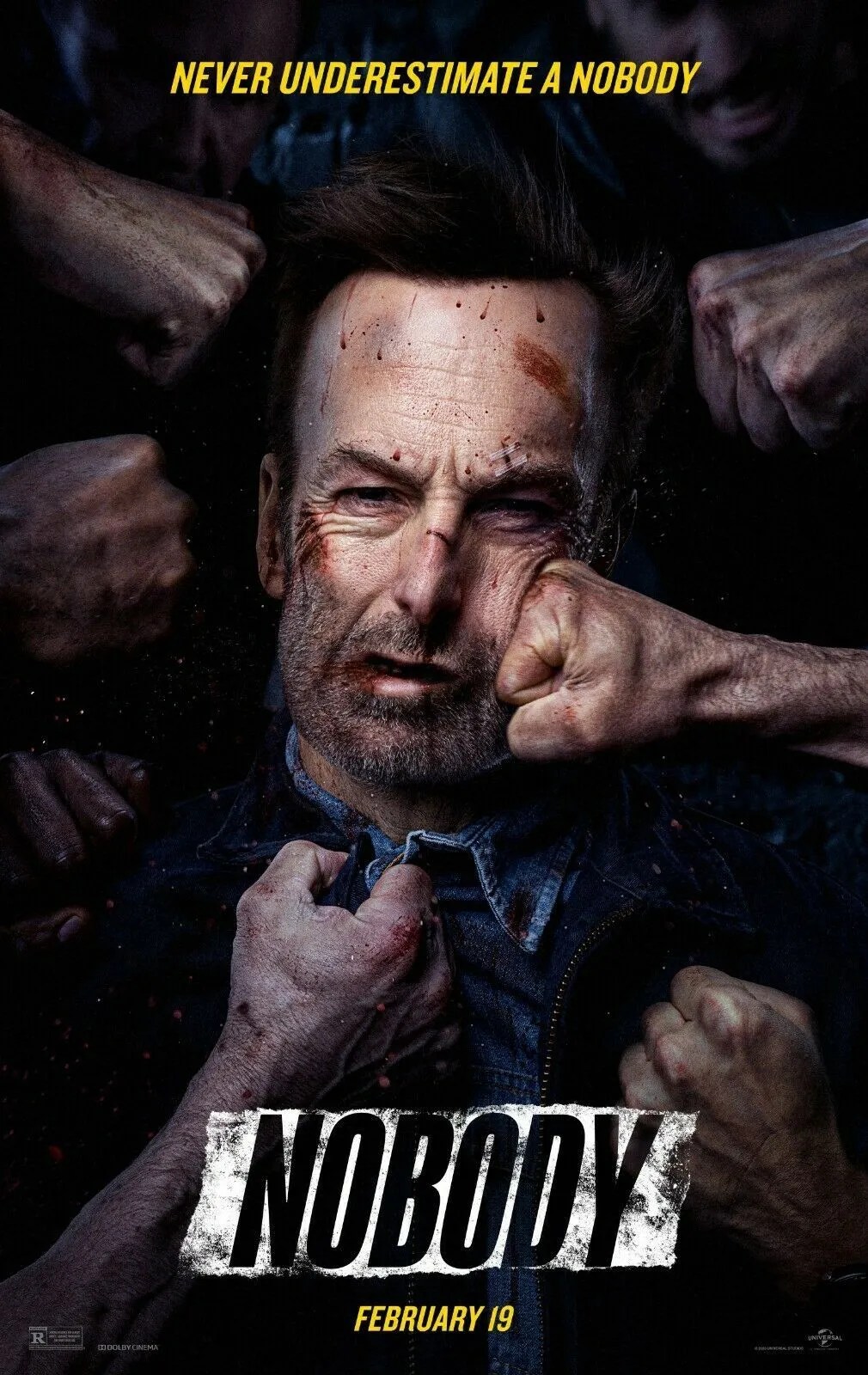
Written by Derek Kolstad, who also wrote JOHN WICK, this movie dished up one reveal after another once act 1 had lulled us all into a false sense of who’s who. In fact, those reveals had me watch the film three times over the weekend to see if I could catch them all.

Act 1 establishes the protagonist, Hutch Mansell (played by the amazing Bob Odenkirk), as the most beige husband and dad on the planet. Then acts 2, 3, and 4 rip our preconceived notions apart — just like they do for Hutch’s sullen teen.

Unlike in JOHN WICK, Kolstad lets the cute pet live. (I never saw JOHN WICK due to the dead dog. And I will never, ever watch THE GODFATHER because of the horse.)

Another interesting lesson from this script was its upside-down protag arc. By the time Hutch has made his way through untold rounds of ammunition, he’s basically reopened his backstory persona.

Whether interested in watching the film as a masterclass on reveals or you just want a Saturday night popcorn flick, NOBODY has you covered.

COLLATERAL (2004)
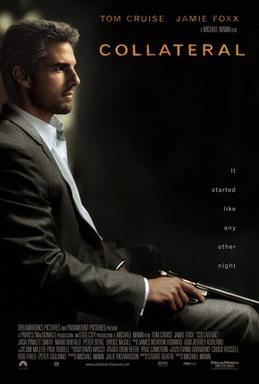
I lost some of my fan luster for Tom Cruise when the first MISSION IMPOSSIBLE (1996) made Jim Phelps a bad guy. Almost as bad as a dead horse in bed.

Hence, I’d missed COLLATERAL in the theatres. But a passing comment from a screenwriting guru had me curious. This movie, he said, was a great example of escalating peril for the protagonist, Max, played by Jamie Foxx. I asked Alexa to pull up the movie.

Like NOBODY, this film has some terrific reveals (and a cameo with Jason Stratham that threw me). But the protagonist’s arc, indeed, promises escalating doom for Max.


Written by Stuart Beattie, who also penned the 2003 PIRATES OF THE CARIBBEAN: THE CURSE OF THE BLACK PEARL, COLLATERAL’s act 1 establishes Max as a hardworking taxi driver with modest dreams of owning a chauffeuring company. During the following acts — beginning when the first target of hitman Vincent (Cruise) takes a header out a window to land on Max’s taxi — poor Max is forced try different means to survive: from waving over passersby to impersonating Vincent to overpowering a cop, and more. Definitely a solid example of ever-rising stakes and good reminder for me as I work on my current concept and outline.

THELMA (2024)
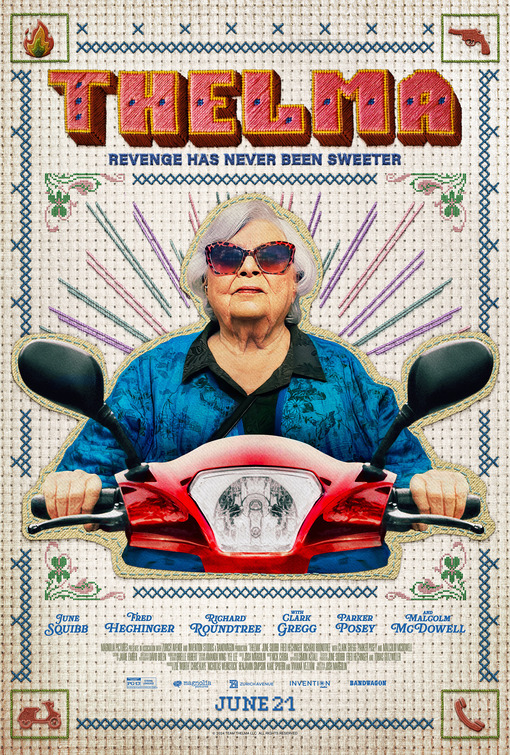
THELMA has been my favorite adventure flick of the year. There I said it.

The suspense of watching nonagenarian June Squibb scale an old staircase or traverse a cluttered lamp store holds its own against CGI-bloated superhero flicks — as does Richard Rountree‘s amazing titanium hip action.

Here again we witness ever-rising stakes, but now in writer/director Josh Margolin‘s multi-award winning tale of a grandmother duped out of $10,000 by scammers.

As I watched, I thought about pacing, the smart use of lighting and music to create suspense (even when it’s as background for someone rolling off a bed), and a budget well spent.

I also thought about determined creatives creating — and how our lives are speckled with bouts of comedy and drama and suspense. We just have to figure out how to fashion together 90 pages that don’t put viewers to sleep.
Leave a comment

Filed under screenwriting, Uncategorized

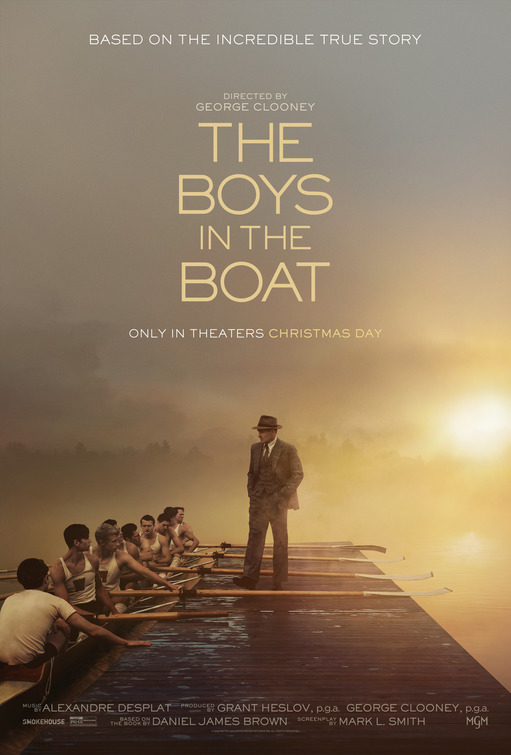
THE BOYS IN THE BOAT: The script

On this National Screenwriters Day, I want to talk about my most recent movie-watching experience and what it showed me about “getting it right.”

Last weekend, I sat in the theatre waiting for the opening frames of THE BOYS IN THE BOAT, worried. I love the book, and translating from book to screen is about as simple as translating from English to, say, squirrel.

When I’d first read terrific book, The Boys in the Boat, by Daniel James Brown in 2013, I knew how I’d write the film’s opening. Start with a tight shot, gradually move out, and then cut to something completely different:

EXT. LAKE – DAY

Silence. A single oar slices through murky water. And again. And again.

Breathing. The deep and strained breathing of one man.

Now more oars, EIGHT to be exact, unite to shoot a sleek scull through the water.

COXSWAIN (O.S.)
Sprint! Now! Now! Now!

The sounds of breathing are replaced by an the roars of an unseen crowd as THREE EIGHT-MAN RACING SHELLS sprint to an unseen finish line.

EXT. GOLD AND RUBY MINE CAMP- OLD SCHOOLHOUSE – DAY

Scruffy 10-year-old JOE RANZ sits on worn wooden steps while birds sing above the dirt, mud, and despair at this Godforsaken goldmine.

HARRY RANTZ, his father beaten down by the Depression, exits the school. followed by a bespeckled SCHOOL TEACHER. The two men shake.

Harry descends the rickety steps. Joe looks up as his father, whose face flashes a few seconds of regret. With a curt nod to his son, Harry heads down a muddy track. He doesn’t look back to see little Joe standing, watching, and swallowing hard.

And so forth.

In the theatre, the film began — and its opening scene was on the water. Woot, woot … But, wait, it’s a clumsy kid. Huh? Soon we meet Joe Rantz, circa 1930s, as a UW freshman.

As I watched the next two hours, I thought how these two hours would have been condensed into my second and third acts. Act 1 would have been Joe’s Depression-era childhood, being abandoned by his evil stepmother at the age of 10. I wanted more of Joe.

But screenwriter Mark L. Smith and director George Clooney know what they’re doing. So does author Daniel James Brown.

Realizing how many drafts must have gone through the development wringer, I think this was, indeed, the right script. This movie was exactly what Joe Rantz would have wanted. In the book Brown describes their first meeting when Rantz gave him his marching orders:

I shook Joe’s hand again and told him I’d like to come back and talk to him some more, and that I’d like to write a book about his rowing days. Joe grasped my hand again and said he’d like that, but then his voice broke once more and he admonished me gently, “But not just about me. It has to be about the boat.” — Prologue, The Boys In The Boat

This script honored all those young men — “the boat” — who in that extraordinary moment in 1936 did something remarkable. This script and movie, let us share in that.

Nicely done.

Leave a comment

Filed under Uncategorized

Go, Team!

I recently mentioned to a producer that I like the collaborative side of screenwriting — my words on the page take on new life once others weigh in and shape what I began. “All the inspired words of God are gone,” I said. “I’m not going to write any of them.”

I meant it.

So I appreciated reading something similar from the amazing Richard Walter, chair of UCLA’s screenwriter grad program. In the terrific ISA Insider Q&A, “Character Is Story,” he said:

“If you get precious about what you’ve done you are your own worst enemy. Many will tell you the downside of writing for the screen is that so many people come between you and the final work, the movie, you are creating. I say, that’s not the downside, that’s the upside, that’s the special nature of writing for the screen. You are part of a family of creative artists and craftspeople, collaborating and working together on a common and seamless enterprise, if it’s any good. You should rejoice. Don’t merely tolerate changes they make.”

Richard Walter

Go, Team!

Leave a comment

Filed under screenwriting, Uncategorized

Learning from Steve Kaplan

I’ve been rereading one of my favorite books, Hidden Tools of Comedy, by Steven Kaplan, and discovered Kaplan was the May 17 guest on the Bulletproof Screenwriting Podcast. Remember:

“The art of comedy is the art of telling the truth about what it’s like to be human.” — Steven Kaplan

What makes a script funny — or not? These 71 minutes offer some insight.

Leave a comment

Filed under moviegoing, Uncategorized

Confessions of a comedy writer

I’ve been keeping this under wraps for years, but, well, I don’t like most of today’s comedy flicks.

Case in point, last night I finally started streaming a popular 2018 comedy, but I switched to Tom Hanks’ distinctly non-comedic SULLY less than 30 minutes into it. Sigh.

And, here I am focusing on writing comedy scripts …

What’s wrong with me?

I don’t like stupid humor. And I don’t like humor at the expense of a character getting hurt (yeah, never did like the THREE STOOGES).

I like smart writing and smart characters verbally sparring. I revel in the classic comedies of the 20th century. Here are nine favorites (with two being from the 21st century):

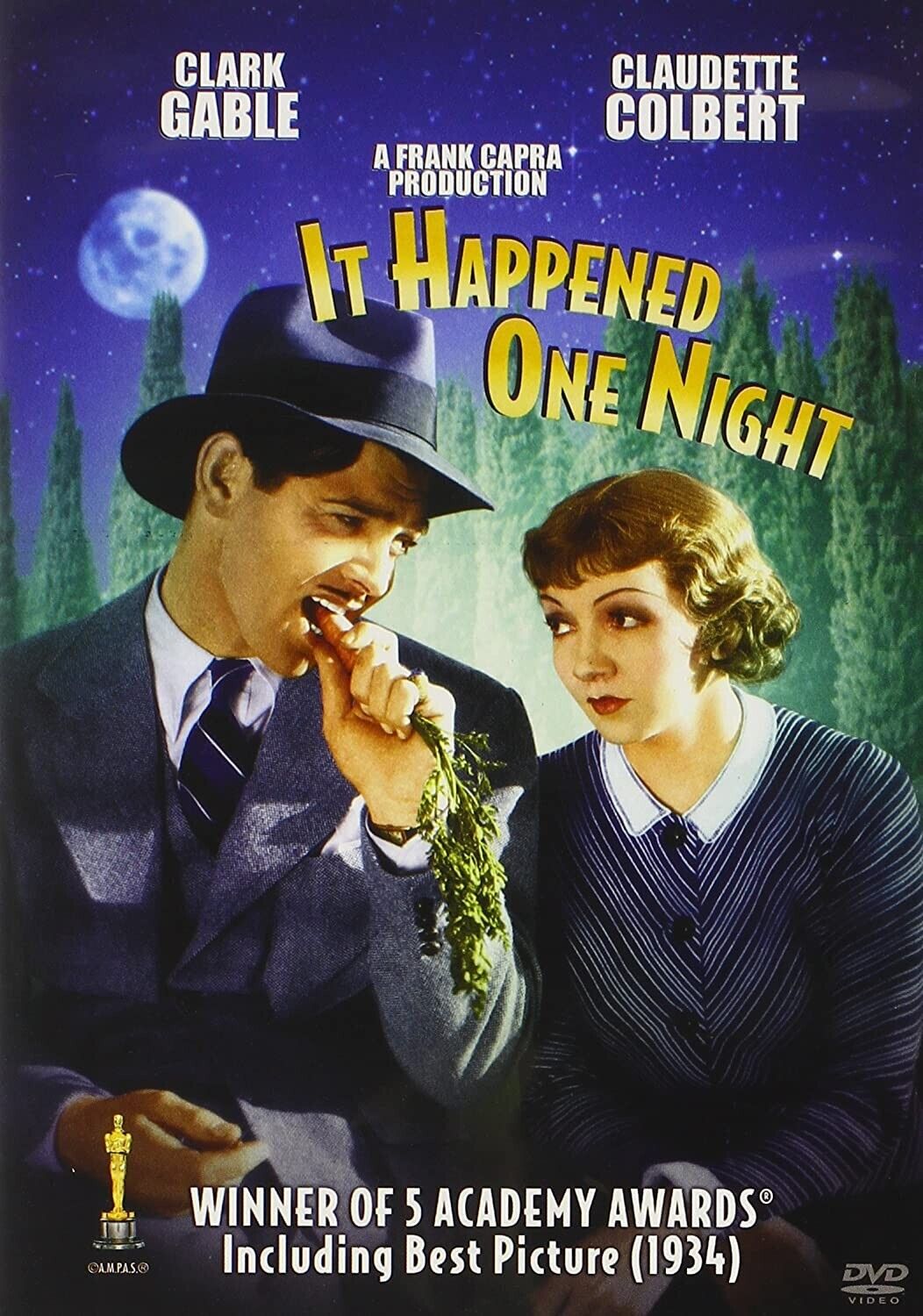
It Happened One Night (1934) with Clark Gable and Claudette Colbert

Dunking donuts into coffee properly and effective hitchhiking are just two “lessons” in this film. But more important lessons are the cost of privilege and the cost of assumptions.

My Man Godfrey (1936) with William Powell and Carole Lombard

This film’s hilarious take on homelessness and privilege is still surprisingly relevant today.

A New Leaf (1971) with Walter Matthau and Elaine May

Elaine May and Jack Ritchie wrote this wonderful and simple film about a newly impoverished rich playboy (Matthau at his droll finest) marrying for money and murder.

What’s Up Doc? (1972) with Barbra Streisand and Ryan O’Neil

My millennial daughter played this movie for friends at numerous sleepovers. A perfect blend of slapstick and smart, often ironic, banter.

Raising Arizona (1987) with Nicolas Cage and Holly Hunter

A movie that shows off the best of the over-the-top brilliance of the Coen brothers!

Grosse Point Blank (1997) with John Cusack and Minnie Driver

One of my favorite concepts of all time: A hitman goes to his 10-year high school reunion.

Galaxy Quest (1999) with Tim Allen, Sigourney Weaver, Alan Rickman(!), Tony Shalhoub(!), et al

By Grabthar’s hammer, this perfect comedy is packed more quotable one-liners than 99.5% of all films.

Legally Blonde (2001) with Reese Witherspoon

Another terrific concept: Send an apparently shallow airhead to Harvard Law School. A great reminder that looks can be deceiving.

Brittany Runs a Marathon (2019) with Jillian Bell

I didn’t expect to love this film, but what a terrific (and very funny film) film about finally growing up.

This is not my complete list of favorite comedies by any means, but I finally am opening admitting to being disappointed in most of what passes for comedies today.

What are your top comedies? What have I overlooked or judged unfairly?

1 Comment

Filed under Uncategorized

Truth, Reality TV, and the End

truth

Like thousands (millions?) of other Americans, I couldn’t vote fast enough this year. Living in a mail-in ballot state, I received my ballot two weeks before the election.

I don’t like that; I miss the duty-filled community I felt going to a polling place. But this year, voting more than 10 days before November 8 felt like washing my hands of this entire presidential-campaign morass. (Unfortunately, mailing a ballot doesn’t automatically cleanse the airwaves, streets, and mailboxes of campaign noise. So I’m stuck with 10 more days of ick.)

But America is getting exactly what it deserves in the 2016 presidential race: a reality show dressed up as a sideshow.

We live at a time of reality on roller skates racing by a train wreck.

The Roman Empire lasted more than 500 years. Will the United States make it to 250 years? It’s a toss up.

If we don’t, it won’t be because of invading German Goths like those who conquered Rome. It won’t be terrorists, immigrants, global warming, over population, artificial intelligence getting fed up with humans (although who can blame it),  or an asteroid hitting Earth.

America will rot from within. We’ve been so busy trying to be enlightened that we have forgotten the truth.

Two thousand years ago Pilate asked Jesus Christ, “What is truth?” (John 18:38).

The Truth was standing in front of him.

Leave a comment

Filed under Jesus, politics, truth, Uncategorized

Goats, a llama, and me

dolly-her-boys-07-2016

(Left to right) Dolly, Nettle, Buckwheat, and Alfalfa hanging out and enjoying the summer sun. 

Having spent a fair amount of time on farms in the past, I’d lived with lots of different animals: horses (trained them), cows (a handful), chickens (lots), turkeys (as few as possible), rabbits (4-H), and dogs and cats.

But I’d never owned goats or llama. Till now.

This summer we added three weathers (i.e., neutered male goats) and a 2-year-old llama to our five acres — and I now have a few things to say about the crew:

Goats bring the party.

Full of opinions and bonhomie, these three are never boring. Triplets and miniature Alpines, they are tasked with eating down the blackberry bushes and other weeds. They are good at their job, but also, I’ve learned, committed to fun.

In fact, to combat goat boredom, we’ve created two playgrounds for them and continue to add to them. I spend an inordinate amount of time thinking of ways to entertain these perpetual puppies.

The boys have also settled into a loose hierarchy: Nettle is the spokesgoat, Buckwheat is the supervisor, and Alfalfa is the head of Dolly’s fan club.

This is a slightly different pecking order than earlier this summer. Alfalfa, the largest kid, was second in command, and Nettle the kid who’d get picked on. But after losing a horn in an unfortunate accident, Alfalfa was demoted. Thankfully, he’s still Dolly’s favorite and when a llama approves of you, you’re going to be OK.

Llamas make great chaperones.

Years ago, I wrote an article about hiking with llamas for a health magazine. During one of the interviews, I learned llamas will keep bear and other predators away from a camp. I wasn’t sure how exactly those camelids could do that, but I tucked that trivia away in my brain.

Once I bought this little farm, we regularly heard coyotes in the wee hours (and frequently saw them in the field during the day). If I intended to use goats for weed control, I’d need to get them a guard so prevent them becoming someone’s lunch.

And so Dolly (she came with the name, by the way) joined us first.

Llamas, I’ve discovered, are the cats of the livestock world. They don’t care about you really, but do accept your homage. On their terms.

The boys adore her and follow her across the pasture in parade formation. I have also seen her herd them back to the stalls when something in the woods (a lurking coyote?) causes her concern.

Originally owned by a retired nurse, Dolly next went to a family that raised miniature Angus. They didn’t much care for her, and didn’t do anything with her, so the poor girl was mostly left to her own devices. Not so with us. She’s rightfully spoiled, and I count as one of my great successes in life when she gave me a llama kiss.


Leave a comment

Filed under farm life, horses, Pets, Uncategorized

Talking to Strangers

An 8-year-old walks home alone for the first time and, after losing his way, asks the help of a 35-year-old man. That man turns out to be the very wrong person, and the boy is found dead.

What parental nightmare tops this? Yet nearly every parent hears repeated pleas from their tween and pre-tween kids to allow them a chance to walk home alone, to walk to the store alone, to stay home alone, etc. And some kids, for whatever reason, simply get separated from their parent and become lost.

So how can we make our kids safer? Teach your child how to talk to strangers and which strangers to talk to.

I first read this counter-intuitive advice in Gavin DeBecker’s book Protecting the Gift. We adults talk to strangers all the time, he points out, and our children notice. Teach them, then, who they should talk to in an emergency.

A policeofficer or firefighter? Shouldn’t we advise kids to go to them for help? Yes, right, but … I can’t remember the last time I saw one of them on the street. How about a clerk in a store? Another good idea, if a store is around.

A new game

When my daughter and I are in crowds (e.g., in an airport or at a large park), we play the “lost game.” “Pretend your lost, Jo,” I say motioning toward the strangers around us. “Who would be a good person to ask for help?”

When my daughter and I first began this exercise, she would often pick the best-looking person around. But what does being good-looking have to do with safety? (Remember Ted Bundy?)

“Find a woman with a child or children,” I suggested instead, explaining that moms with kids are more likely to stop what they are doing to help a child in need. They are also most likely to stay with the child until the problem is resolved.

What about asking a man in a suit? Hmm … he may be on his way somewhere important and may just point the child in the right direction.

What about grandparent-types ? If it’s a couple and you don’t see a mom, consider them to be your Plan B, I’ve told my daughter. Then, perhaps, an older woman alone.

Yes, yes, yes, I’m making blanket statements to my daughter. But she now knows that she has to think about the who she asks for help if the need arises.

Leave a comment

Filed under children, kids, parenting, Uncategorized

Where Did the Time Go?

I’ve been thinking about Time lately.

We have so many ways to talk about Time: “no time like the present,” “don’t waste time,” “time is of the essence,” “time is precious.”  You get the idea.

But what in the world is Time?  

For centuries, philosophers and scientists have asked that question. They still don’t agree on an answer.

Sir Isaac Newton considered Time to be part of the universe’s structure, kind of  like the film strip to an endless movie.  (He wouldn’t have thought of  “movie,” of course, but I find that a helpful way to understand his notion.)  Others say Time isn’t a thing, and it isn’t an event in and of  itself.

I like Newton’s idea, which allows for time travel (and I’m all for that). But I also like his idea because I have a hard time believing that events simply evaporate. I better like the idea that once a moment is over, that moment goes into  God’s Time Storage Unit.

And if we find that celestial storage unit, we can check out a moment and relive it. At the very least, we could look at it again.

Wait, look at a moment again? Maybe that makes our memories the Time Storage units that God has given to each of us.

1 Comment

Filed under Random thoughts, Uncategorized

Callahan

John Callahan, cartoonist and author

Recently, two of my favorite interview subjects have passed away. Author Dick Francis in February, and on Saturday, July 24, politically incorrect cartoonist John Callahan. 

I interviewed Callahan years ago for Northwest Health magazine, and while excited to get the assignment, I was terrified to meet him. I was sure he’d be gruff as the unapologetic, wavey-lined characters he drew.

I drove to Portland, Oregon, for the interview, and found his ground-floor apartment on a cloudy autumn day. I knocked, and heard voices on the other side of the door. One of his caregivers, finishing his shift, opened the door and invited me in as he left.

I stepped into Callahan’s studio apartment, noticing the lift equipment and smells that accompany someone who’s been in a wheelchair for all of his adult life. He was surprisingly soft spoken and later I wondered if it was because his neck had been broken at age 21 (drunk-driving accident; he was the drunk) and his lungs had lost their full force.

As we chatted, he said that he’d dreamed the night before that we went to a movie. I asked which one; he didn’t say, but instead steered us out the door and to his favorite local espresso bar.

I hurried along after the cartoonist as he propelled himself down a city sidewalk. People knew him, and the waves and hellos didn’t stop as he jetted along. Cars stopped for Callahan. They had to, since he didn’t stop for them as he’d blaze into traffic.

After the lattes, we returned to his apartment, where I interviewed him for the next few hours. He willingly talked about his alcoholism, his life since the accident, his career.

At some point, a friend arrived, and I learned Callahan was on a deadline of his own. His friends were his sounding board, he explained. He’d draw, and they’d tell him if it was funny or a piece of crap. He had a fax machine nearby with a direct line to his agent once it passed their test.

On this particular day, he and his friend talked about a recent cartoon. The friend had thought it ho-hum, so Callahan decided to try something new.

With the pen held in his stiff hand, two wavy-lined figures appeared. One evolved into singer Madonna, in all her pointy-breasted splendor. The other character was a stout woman, and he asked to no one in particular how he could show her cooking. “Have her hold a rolling pin or a frying pin,” I suggested. He drew both,  as I recall. One implement in each hand.

Finishing up, he added the label: “Madonna and Child”

His friend and I laughed. The cartoon was faxed to his agent. Within minutes, the agent called, her laugh coming through the phone line.

I never saw that cartoon in print. (I always wished I’d asked if I could have it.)  I’ll keep looking for it when I see his works.

Callahan did autograph one of his books for me, though, and I still have it. It sits near my autographed Dick Francis mysteries.

Leave a comment

Filed under Uncategorized